Panel product warranties often stretch 25 years; inverter warranties are commonly shorter. Australian buyers who treat those numbers as interchangeable misunderstand where replacements — and labour costs — usually appear.
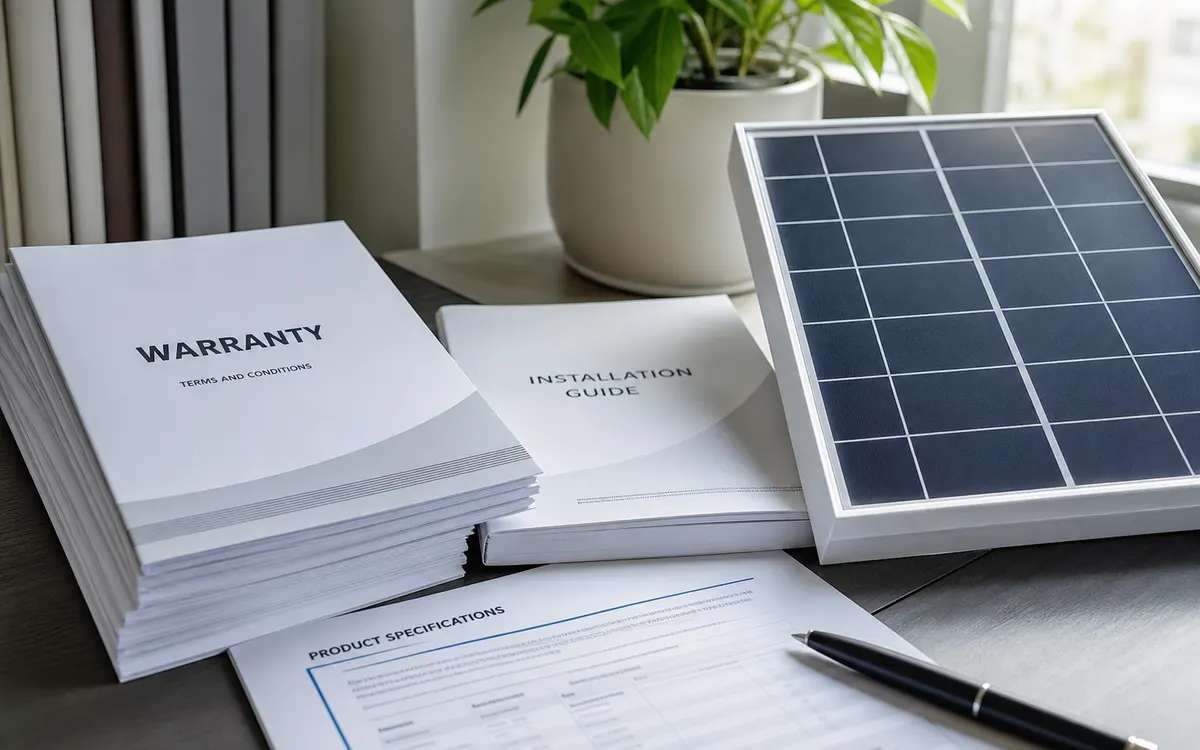
Two promises on panels
Product warranties cover manufacturing defects. Performance warranties guarantee a minimum output curve over time, typically with a first-year drop then annual degradation caps. A panel can still be “in warranty” while producing less than your mental model of year-one output.
| Component | Typical cover pattern | Owner question |
|---|---|---|
| Modules | Long product + performance years | Who pays labour for a roof swap? |
| String / hybrid inverter | Shorter base; extensions sold | Is extension worth the premium? |
| Microinverters / optimisers | Often longer, roof-mounted | How is a single unit replaced? |
| Battery | Years or throughput clauses | What voids the cycle count? |
- Separate product years from performance percentages
- Ask who handles labour and scaffold for valid claims
- Note Australian consumer law rights alongside brand warranties
- Keep serials and proof of purchase with the property file
A 25-year panel warranty does not make the inverter a 25-year device.
Inverter replacement budgeting
Many households should expect at least one inverter replacement inside a long panel life. Extensions help; so does choosing brands with local parts support.
Claim realities
Performance claims need monitoring evidence and often on-site testing. Dust, shade, and export limiting are not manufacturing defects. Document baselines early.
Buying for longevity without overpaying
Mid-tier panels with strong local support can outlast orphan premium brands. Prioritise bankable warranties and installer accountability over brochure superlatives.