Inverters derate when they get hot. A garage wall that feels convenient in August can become a thermal trap in a February heatwave — exactly when households want every watt of air-conditioning offset.
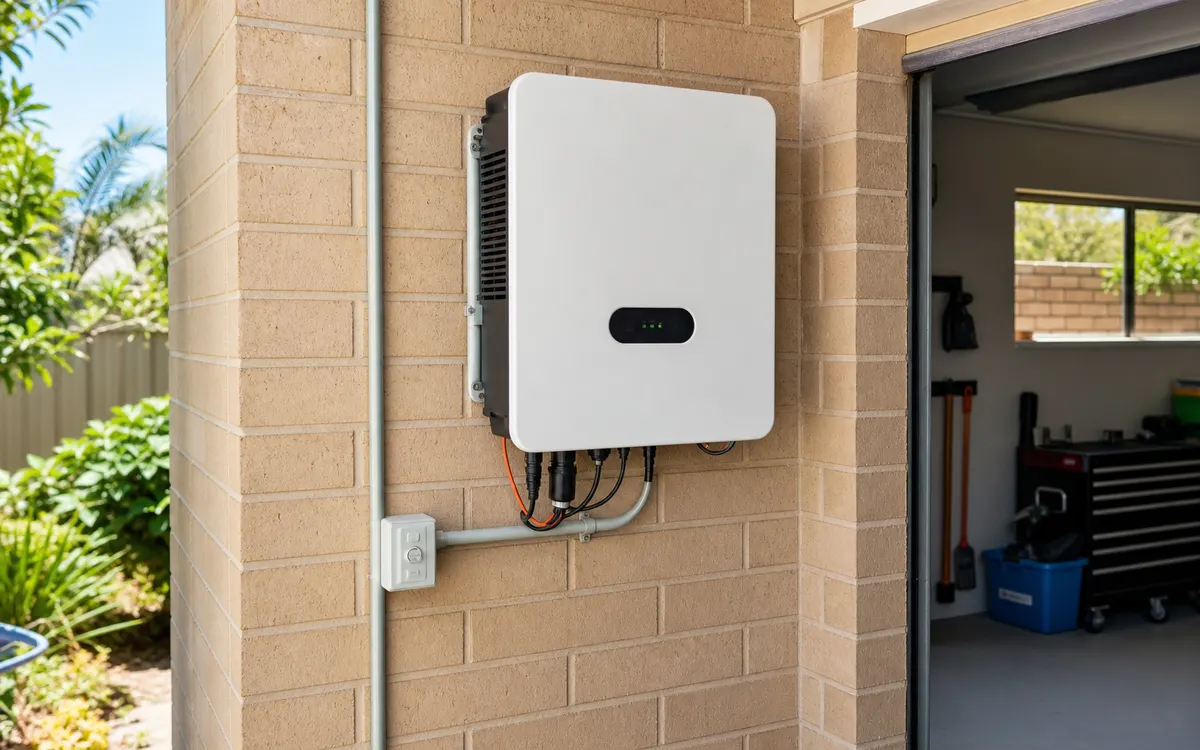
Why heat throttles output
Power electronics protect themselves by reducing output as internal temperatures rise. Full sun on a dark roof plus a hot plant room is a double stress: panels are already less efficient, and the inverter may clip further.
Garage myths
“Indoors” is not automatically cooler. Uninsulated garages facing west can exceed outdoor shade temperatures. Parking a hot car beside the inverter after a commute adds radiant load. Dusty workshops clog fans and heatsinks.
- Prefer shaded, ventilated walls out of direct western sun
- Respect manufacturer clearances around heatsinks
- Avoid mounting above heat pumps or water heaters
- Ask about noise — some units fan hard on extreme days
A cool inverter on a mediocre wall beats a boiling inverter on a tidy one.
Monitoring heat-related losses
If summer midday production plateaus while irradiance is still rising, thermal derating or export limiting may be at work. Distinguish the two before relocating hardware.
Batteries in the same space
Hybrid setups that share a hot garage need even stricter thermal planning. Battery warranty conditions often state operating temperature ranges that suburban garages breach on extreme days.
Retrofit options
Shade sails, improved airflow, or relocating to a cooler wall can recover energy. Any move must keep cable runs, isolators, and CEC compliance intact — this is licensed work, not DIY shuffling.