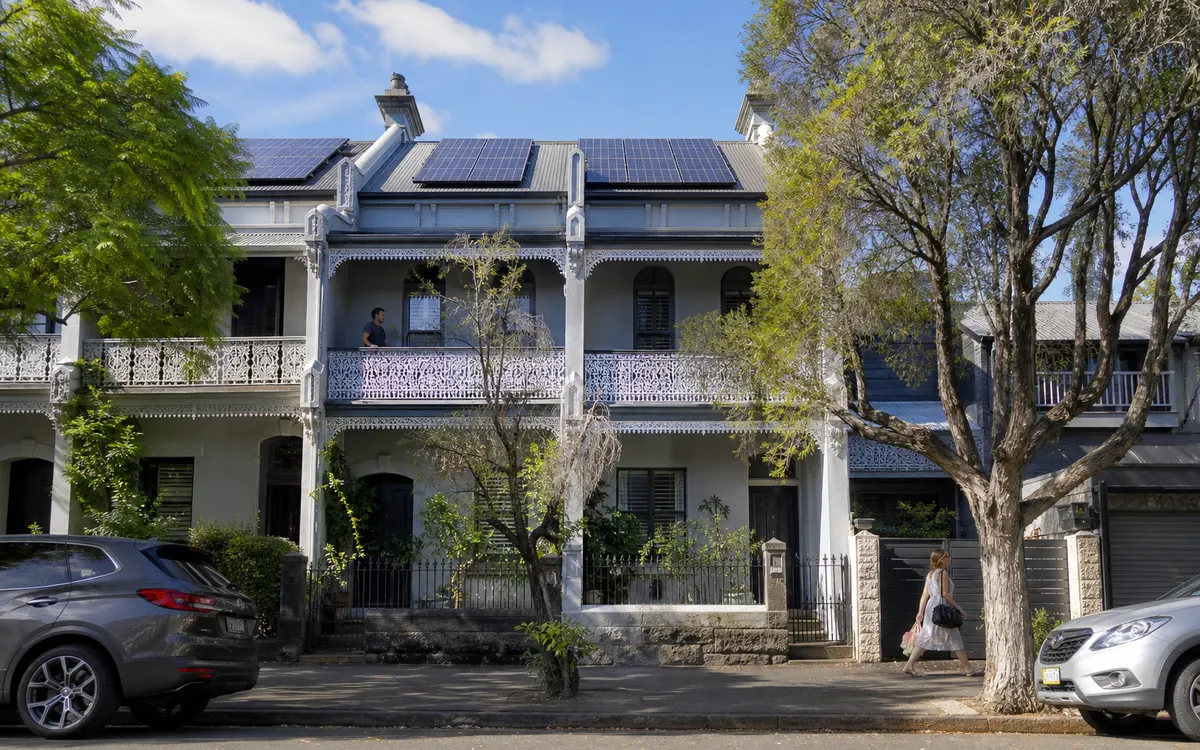
A narrow Sydney terrace with a modest west-north roof, daytime vacancy, and a ducted cooling habit is a useful stress test for solar storytelling. This case study walks through how a realistic summer quarter can look once export limits and tariffs enter the frame.
The household setup
Consider a 6.6 kW array on a split north–west layout, string inverter, 5 kW export limit, TOU retail plan, and no battery. Two adults work away weekdays; evenings bring cooking and cooling spikes after 6pm.
- Pre-cool the house at 2–4pm on solar where comfort allows
- Run laundry on weekends before noon
- Compare FIT credits against avoided shoulder imports
- Reassess a small battery only after a full summer of data
On a terrace, behaviour is capacity.
What the summer quarter often shows
Strong midday exports on workdays, some curtailment on mild sunny Sundays, and stubborn evening imports when cooling peaks. Bill savings still appear — driven more by weekend self-use and afternoon pre-cooling than by FIT glory.
Lessons for similar homes
West modules earn their keep. Monitoring proves whether pre-cooling works. A battery may help evening peaks, but only after the terrace’s limited solar surplus is measured, not assumed.
Quote discipline
Demand shade analysis for neighbouring taller terraces. Insist on export-limit assumptions in writing. Itemise scaffolding for tight access lanes.
After the first summer
Retune the retail plan, adjust timers, and only then decide on storage. Case studies fail when households skip the data season and jump to the next hardware upsell.