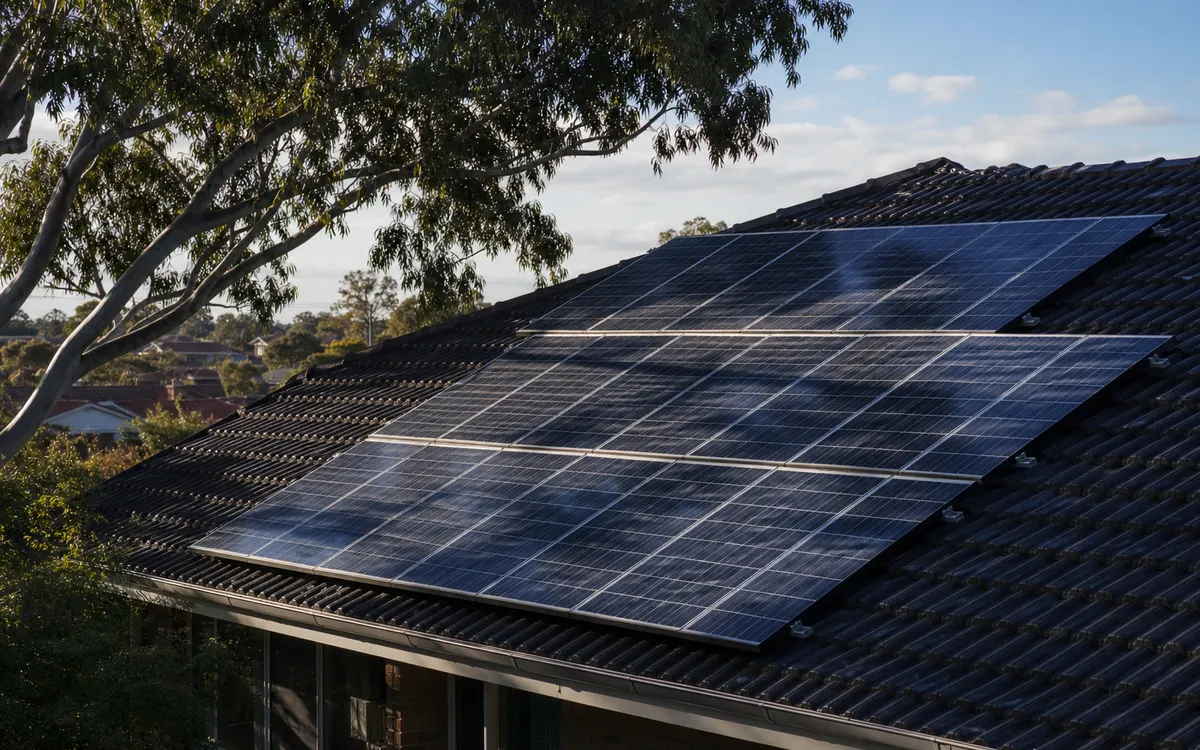
A neighbour’s liquidambar or eucalyptus can do more damage to a string-inverter system than a slightly imperfect roof orientation. Shade on a few modules often becomes a string-wide problem — and trees grow after the site survey photo is filed.
Why strings hate uneven light
Modules in a series string share current. When one panel is shaded, the string current can fall toward that weaker module’s level unless bypass diodes and inverter MPPT behaviour intervene. The result is disproportionate energy loss for a small shaded area.
Seasonal shade is easy to miss in summer quotes
Sales visits on long December evenings may miss June morning shade from a deciduous tree or a western neighbour’s winter shadow. Ask for shade modelling at winter solstice, not only a sunny-day irradiance map.
- Photograph shade lines at 9am, noon, and 3pm in the season you worry about
- Ask which panels sit on which MPPT inputs
- Discuss pruning rights and council tree rules before blaming the array
A growing tree is a yield forecast error that compounds every spring.
String layout as a mitigation
Skilled designers isolate likely-shaded modules on a separate MPPT or exclude them from the array. Blank roof space can be smarter than forcing every tile-covered plane into production.
When to escalate beyond string architecture
If shade is moving and persistent, optimisers or microinverters can recover energy the string would lose. Compare the extra hardware cost against fifteen years of shaded kilowatt-hours — not against a shade-free fantasy yield.
Monitoring tells the truth faster than arguments
String-level or module-level monitoring shows which hours underperform. That evidence helps with installer warranty discussions and with deciding whether pruning, redesign, or acceptance is the rational path.
Before you sign
Put known trees and likely growth on the quote assumptions. If the designer ignored them, the payback number is fiction.