Every inverter brand ships an app. Few households need every chart those apps offer. The useful layer is early fault detection, shade diagnosis, and a reality check against the generation promised in your quote.
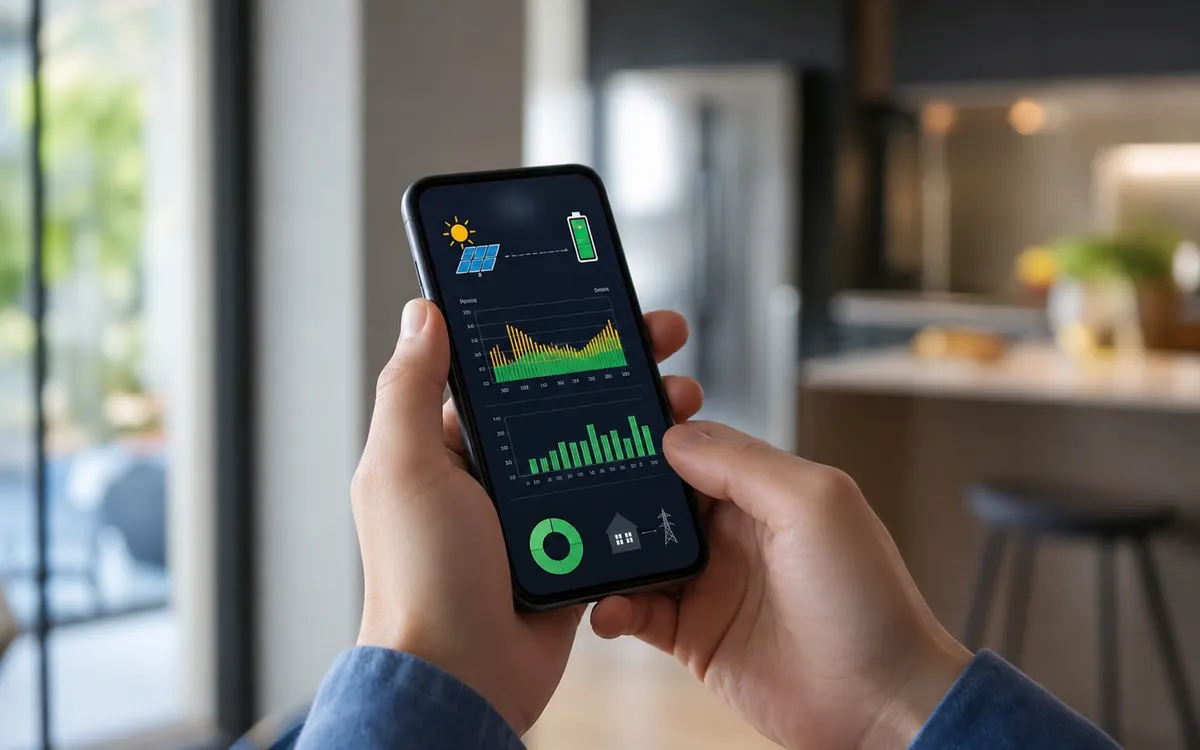
What “good enough” monitoring looks like
Daily generation, export, and household consumption (if metered) cover most needs. Push alerts for inverter faults save more money than animated 3D roofs. Panel-level views help when shade or module faults are suspected.
- Confirm Wi-Fi or LAN reliability at the inverter location before install day
- Save login credentials outside the installer’s phone
- Screenshot a healthy summer week as your baseline
- Set alerts for zero generation on clear days
An app that catches a silent inverter on Tuesday beats one that awards you badges.
Consumption monitoring needs CT clamps
Generation-only portals cannot tell self-consumption stories. If bill savings matter, ensure consumption metering was installed and commissioned, not left as an optional extra on the quote.
Third-party and retailer apps
Some retailers show solar exports on their meters; some batteries add another portal. Too many apps create neglect. Pick one primary source of truth and check it weekly for the first quarter, then monthly.
Using data in disputes
Underperformance claims need comparable sunny-day baselines, not feelings. Export monitoring apps’ CSV or history views when talking to installers or manufacturers.
When the app goes dark
Portal outages happen. Know how to read the inverter’s local display or LEDs so a cloud failure does not look like a dead system.