Rural three-phase homes often look ideal for large rooftop arrays — long roofs, pumps, sheds — until the distributor caps how much you may export. Understanding export limits early prevents buying kilowatts you cannot use or sell.
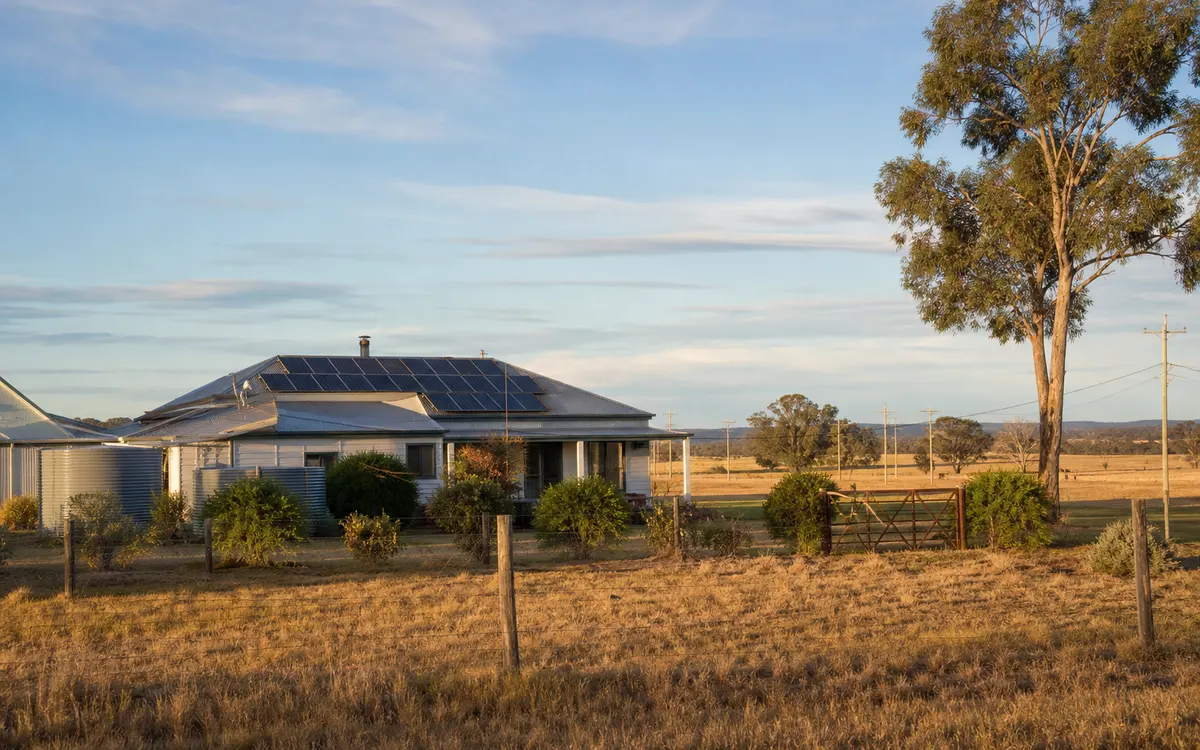
Why rural feeders constrain exports
Long, lightly built feeders struggle with voltage rise when many inverters push power upstream. Distributors protect the network with static export limits or dynamic export arrangements that throttle output in real time.
| Scenario | Design implication | Household response |
|---|---|---|
| Low static export cap | Large array may curtail often | Size to daytime loads; consider storage |
| Dynamic export available | More export when network allows | Confirm compatible inverter and metering |
| Three-phase imbalance rules | Per-phase limits may apply | Balance arrays and loads across phases |
| Pump-heavy daytime load | Self-consumption can absorb more | Align pump timers with solar hours |
- Lodge or pre-check connection early — before paying deposits
- Ask for the approved export limit in writing
- Model curtailment days, not only annual average kWh
- Balance three-phase generation and major loads
Roof space is not network capacity.
Self-consumption strategies on farm and lifestyle blocks
Bore pumps, cold rooms, and workshop compressors are natural solar soakers if timed well. Export limits make that timing financially important, not optional.
Batteries as curtailment sponges
Storage can absorb midday surplus that cannot leave the property. Whether that pays back depends on evening tariffs and rebate settings — model it honestly.
Talk to the distributor pathway, not only the salesperson
Installers translate network rules, but the approval letter is the source of truth. Keep it with commissioning documents.