Rural arrays face soiling that suburban systems rarely see: gravel dust, harvest chaff, canola pollen, and long dry spells. Yield models that assume city rainfall will overstate year-one performance on lifestyle blocks and farms.
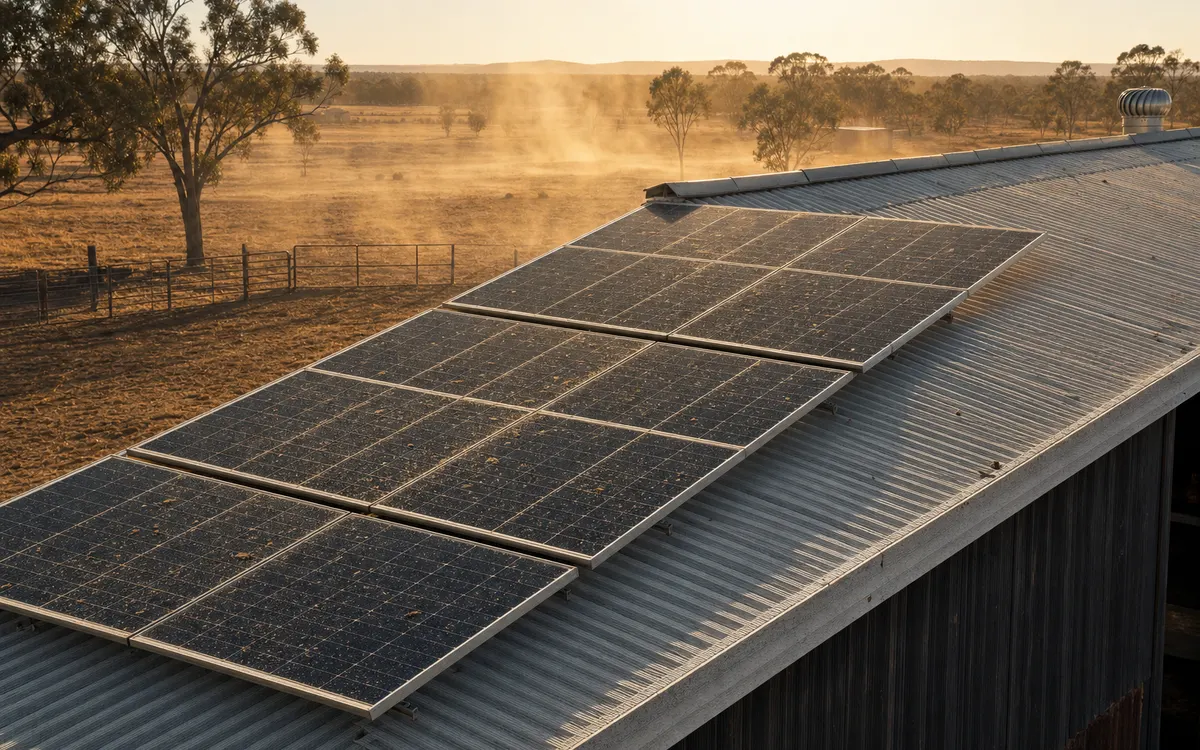
Measure before you schedule endless washes
Compare identical clear-sky days across seasons. If October pollen month is down meaningfully on March, cleaning may pay. If not, save the water and the roof traffic.
- Log generation against a simple sky condition note
- Clean after major dust events, not on a rigid weekly ritual
- Mind water quality — hard bore water can leave films
- Keep livestock shelters and feed dust away from array edges where possible
Pollen season is a monitoring event, not a panic clean every afternoon.
Birds and insects
Rural roofs attract nesting. Droppings create hotspots. Mesh and professional deterrents beat improvised spikes that damage modules.
Design for access
If cleaning will be annual, design safe access from the start. Retrofitted ladders on tall sheds become the expensive afterthought.
Export limits still dominate some sites
Do not obsess over two percent soiling if curtailment discards far more surplus. Rank losses by size.