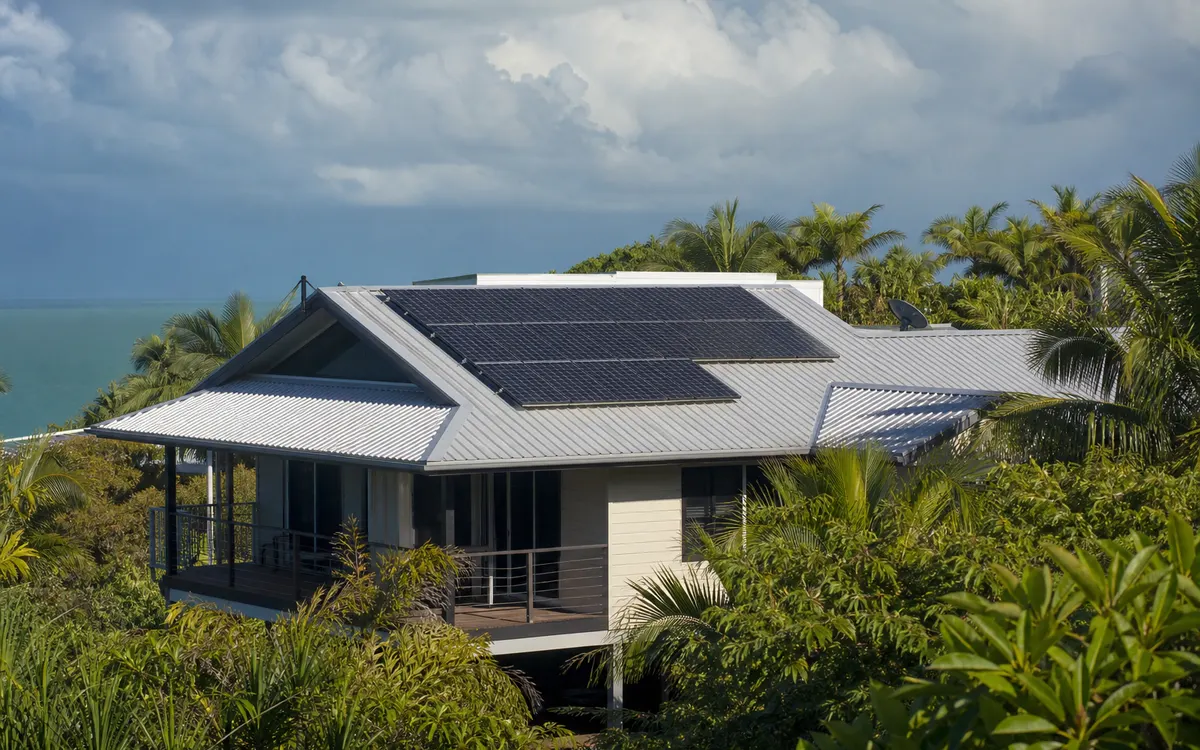
Tropical Australia’s cyclone regions demand mounting systems rated for local wind codes — not a temperate suburban kit with extra screws. Hardware choice, roof type, and installer experience matter as much as panel brand.
Wind regions are not optional footnotes
Australian standards define wind regions and terrain categories that drive clamp spacing, rail choice, and fixing type. A system legal in inland NSW may be wrong for a coastal Queensland exposure.
- Name the wind region on the design documents
- Use CEC-compliant mounting with manufacturer cyclone guidance
- Inspect roof sheeting condition before loading clamps
- Photograph fixings at install for insurance records
In cyclone country, the racking is part of the storm plan.
Roof condition first
Brittle or corroded sheeting fails before clamps do. Re-roofing before solar can be the cheaper long-term path on older tropical homes.
Debris and salt
Salt air and flying debris punish unprotected steel. Specify coatings and stainless fasteners where manufacturers require them.
After a severe weather event
Do not approach damaged arrays yourself. Isolate only if trained; otherwise wait for a licensed assessment. Document visible damage for claims.