Australian rooftop solar mostly cleans itself with rain — yet dusty inland homes, pollen belts, and bird traffic create real soiling losses. The maintenance conversation should separate folklore from measured underperformance.
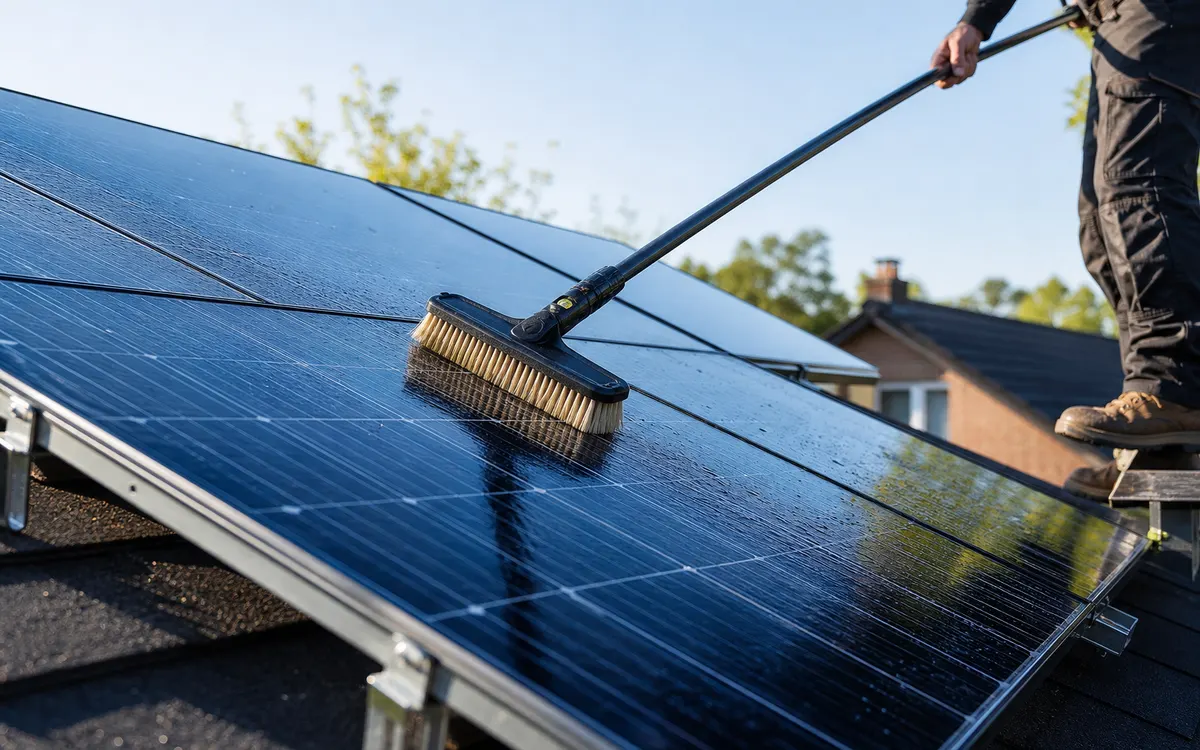
Rain is maintenance for many coastal suburbs
In cities with regular rainfall and moderate pollution, scheduled cleaning often returns little energy for the labour and safety risk. Monitoring first is cheaper than climbing quarterly.
Where soiling actually bites
Rural gravel roads, agricultural dust, heavy pollen seasons, and flat-mounted arrays that do not shed dirt well can lose noticeable output. Bird droppings create local hotspots that rain may not clear.
- Compare generation on similar sunny days before and after a dry month
- Inspect for nesting, droppings, and leaf litter at edges
- Prefer soft water and approved methods — abrasive pads void warranties
- Use harnessed professionals on two-storey or steep roofs
If monitoring cannot see a soiling dip, your ladder is solving a problem you do not have.
Myths that waste money
Daily hose-downs, shiny coatings sold as miracle films, and “must clean after every northerly” schedules are usually oversell. Manufacturer guidance and warranty terms beat social-media tips.
Inverter and isolator checks matter more than polish
Trip logs, error codes, and isolator condition affect uptime more than a thin dust film. Pair any cleaning visit with a visual electrical check by a licensed tech if the system is ageing.
A sensible annual rhythm
Review monitoring each season, clean only when data or inspection justifies it, and keep vegetation trimmed away from the array edges. That is maintenance; polish for its own sake is theatre.